

Tatsiana Padrez, Head of CX Cloud department at ACBaltica
Are your sales teams overwhelmed with routine tasks? Endless customer calls, manual order entry, constant price checks, address updates, and order corrections take up a significant part of their day, especially in large manufacturing and distribution businesses.
Now, imagine reducing that workload with a single B2B customer portal. It's a place where clients can place orders, view prices, track order statuses, manage delivery addresses, and handle routine requests without involving a sales manager.
The result is simple and measurable: Sales teams regain time and can focus on high-value activities and contribute more strategically to the business instead of acting as intermediaries for basic operations.
In this article, we explore how a B2B customer portal transforms the way manufacturers collaborate with their clients and turns fragmented communication into a structured, efficient, and scalable process. We also present our version of such a portal: the Extended B2B Self-Service Portal.
What is a B2B customer portal?
A B2B customer portal is a digital workspace that allows two businesses to work together. It allows B2B customers to place orders online, and those orders go straight into the manufacturer’s SAP system.
The portal is a separate, controlled environment. Customers do not access SAP directly and cannot affect internal processes. They work in an isolated interface that shows only their own data, while SAP remains fully protected and unchanged.
Through B2B customer portal, customers can place orders at any time, check prices, track order statuses, and manage delivery details. This makes regular and repeat ordering simple and predictable without the need for calls or emails.
For manufacturers and distributors, the portal eliminates routine tasks for sales teams. Customers enter all order data themselves, and new orders automatically appear in SAP. Sales managers receive notifications and can focus on exceptions and high-value tasks instead of manually entering orders.
In the end, there is less work for everyone. Customers receive flexibility and transparency, while manufacturers receive clean, structured orders directly in SAP.
Why are B2B customer portals important?
B2B customers value speed and convenience. They want to place orders on their own schedule, access accurate information instantly, and avoid unnecessary back-and-forth.
Without a portal, sales teams become the main interface for routine tasks. They collect order details, confirm prices, check statuses, and manually enter data into SAP. This slows down operations, increases the risk of errors, and limits the number of customers the team can handle.
A B2B customer portal shifts this routine work to self-service. Customers take responsibility for creating and managing their orders while sales teams focus on complex cases, exceptions, and relationships.
For manufacturers, this creates a cleaner, more scalable process. Orders arrive in SAP in a structured format, processing is faster, and customers are satisfied because they are no longer dependent on someone else's availability.
Why traditional B2B ordering remains inefficient
Manufacturers and large distributors usually work with regular B2B buyers who purchase goods in large volumes. Although these predictable patterns make inventory management easier, accuracy and timing remain critical.
This is where the main challenge comes from. Even though all the relevant information is stored in a manufacturer’s SAP, such as order history, pricing conditions, customer-specific discounts, and stock levels, customers cannot access this data directly. B2B customers need to talk to a sales manager for every order, price check, or delivery confirmation. If the manager is unavailable, the process will stop.
This creates challenges for both manufacturers and B2B customers:
|
Manufacturers |
B2B Customers |
|
Sales teams spend excessive time answering routine questions instead of focusing on value-adding activities. Orders are manually re-entered into SAP, increasing the risk of errors. Communication is spread across multiple channels, making it hard to get a complete view of client activity. |
Customers have no visibility in their order history or current order status. Customers cannot place orders independently at any time. All questions and issues handled only through communication with sales manager. |
These problems are not caused by SAP itself. They come from the lack of a structured digital interface that connects customers to the system. Today’s B2B customers expect a B2C-like ordering experience: easy, seamless, and intuitive.
How B2B Customer Portal changes the process
For companies using SAP, the portal gives B2B customers a controlled access to the data already stored in the system. It operates as an independent B2B space, enabling customers to interact solely with their own data without affecting or disrupting core SAP processes.
Our Extended B2B Self-Service Portal is built on SAP Business Technology Platform (BTP), providing a safe, cloud-based environment that works well with the manufacturer's existing SAP systems (C4C or S/4HANA). It offers a secure method for sharing pricing, orders, and statuses with customers, all while safeguarding internal workflows and SAP security. Moreover, it reduces the workload on sales managers by minimizing excessive communication and manual data entry for orders.
The capabilities of our Extended B2B Self-Service Portal
Instead of calling a sales manager, B2B customers can now use the portal to:
-
Place new orders at any time with 24/7 self-ordering
Customers no longer have to wait for a sales manager to be available. They can place orders at any time, even outside business hours or across different time zones. This makes the process of buying things faster and easier. -
View full order history, including past and active orders
All orders are stored in one place. Customers can easily see what they ordered, when it was delivered, and which orders are still in progress. This helps them plan future purchases and avoid asking the same questions again. -
Track order statuses and deliveries
Customers can always check the status of their orders whenever it's convenient for them. They can check if an order is confirmed, in production, shipped, or delivered without contacting the sales team. -
See individual pricing and discounts
Each customer can see their own prices, including volume-based discounts and special conditions. They don't need to confirm pricing by email or phone, which helps customers make faster and more confident decisions. -
Receive real-time notifications when order statuses change
Customers receive a notification as soon as something changes. This eliminates the need for manual follow-ups or requests for updates, ensuring clear and timely communication. -
Repeat past orders in two clicks via order history
Customers can copy a previous order for regular or seasonal purchases and adjust the quantities if needed. This feature saves time and makes recurring orders quick and easy.
Optional features
But our Extended B2B Self-Service Portal can also go further. Optional features can be added to increase efficiency even more:
-
Support for multiple legal entities
Many B2B customers work through several legal entities and delivery locations. The portal allows them to manage all of this data in one place. For instance, a buyer might have offices in Vilnius and Warsaw. With a single profile, they can place orders for different legal entities and select the appropriate delivery address each time. There is no need to create a separate account for each office; everything stays under one user profile, which is clear and easy to manage. -
Analytics
Manufacturers can enable analytics for all orders placed through the portal and view the results directly in SAP C4C, S/4HANA, or SAP Analytics Cloud. This allows them to see when demand peaks, which products are ordered most often and in what volumes, and which customers are ordering them. These insights help teams plan production, manage inventory, and align supply with actual customer demand. -
Ticket management
The portal offers an optional ticket management capability for companies using SAP C4C Sales and Service. Through the portal, customers can submit support requests related to delivery issues, documents, and order details.
For example, if the customer receives damaged goods, they can create a ticket through the portal. The responsible team at the manufacturer will receive a notification, allowing the assigned manager to quickly review and resolve the issue without the need for lengthy email chains or phone calls.
Two interface options
Our Extended B2B Self-Service Portal can be designed to match how your customers prefer to work, typically offering two interface options:
Classic SAP interface
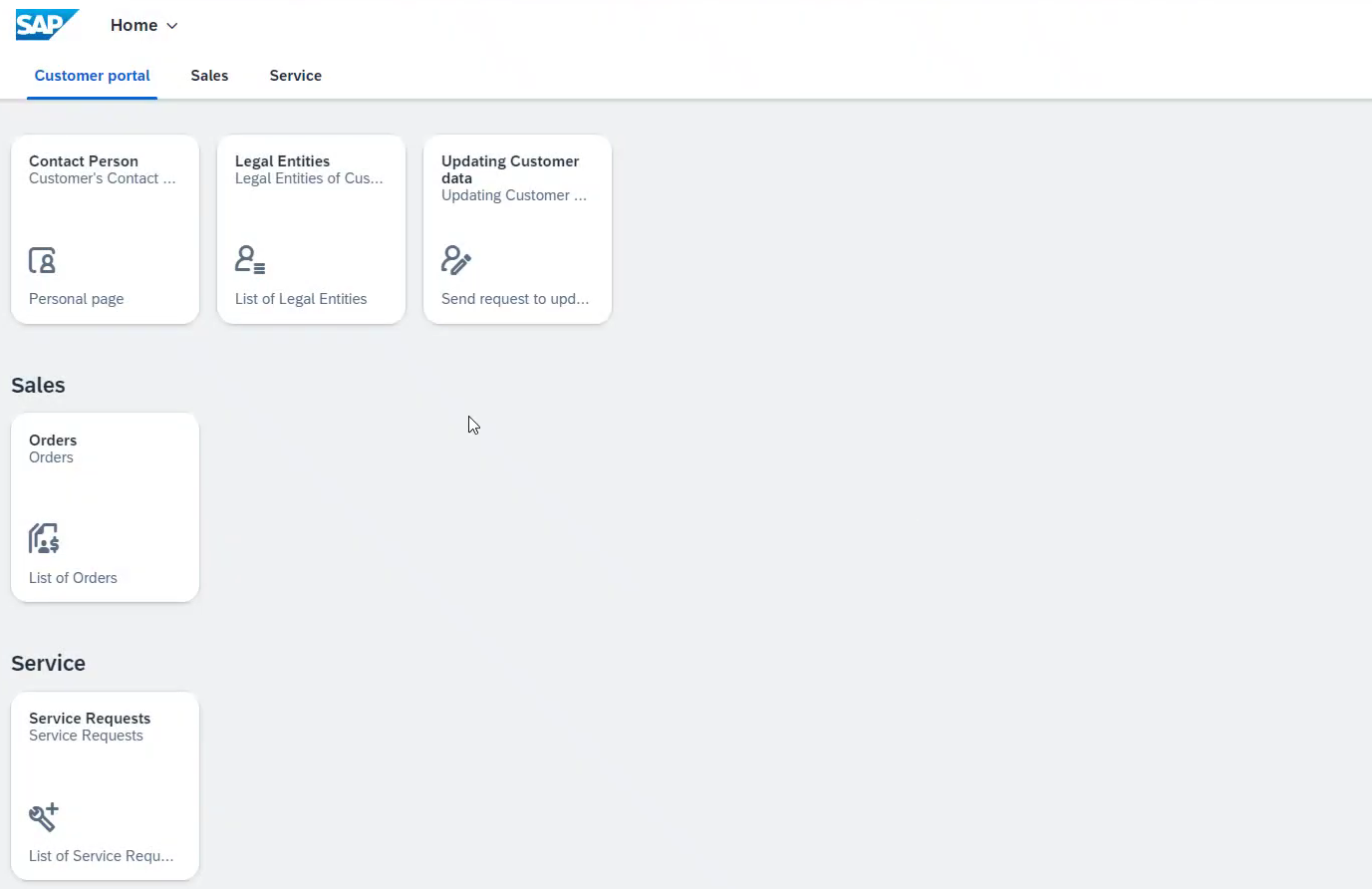
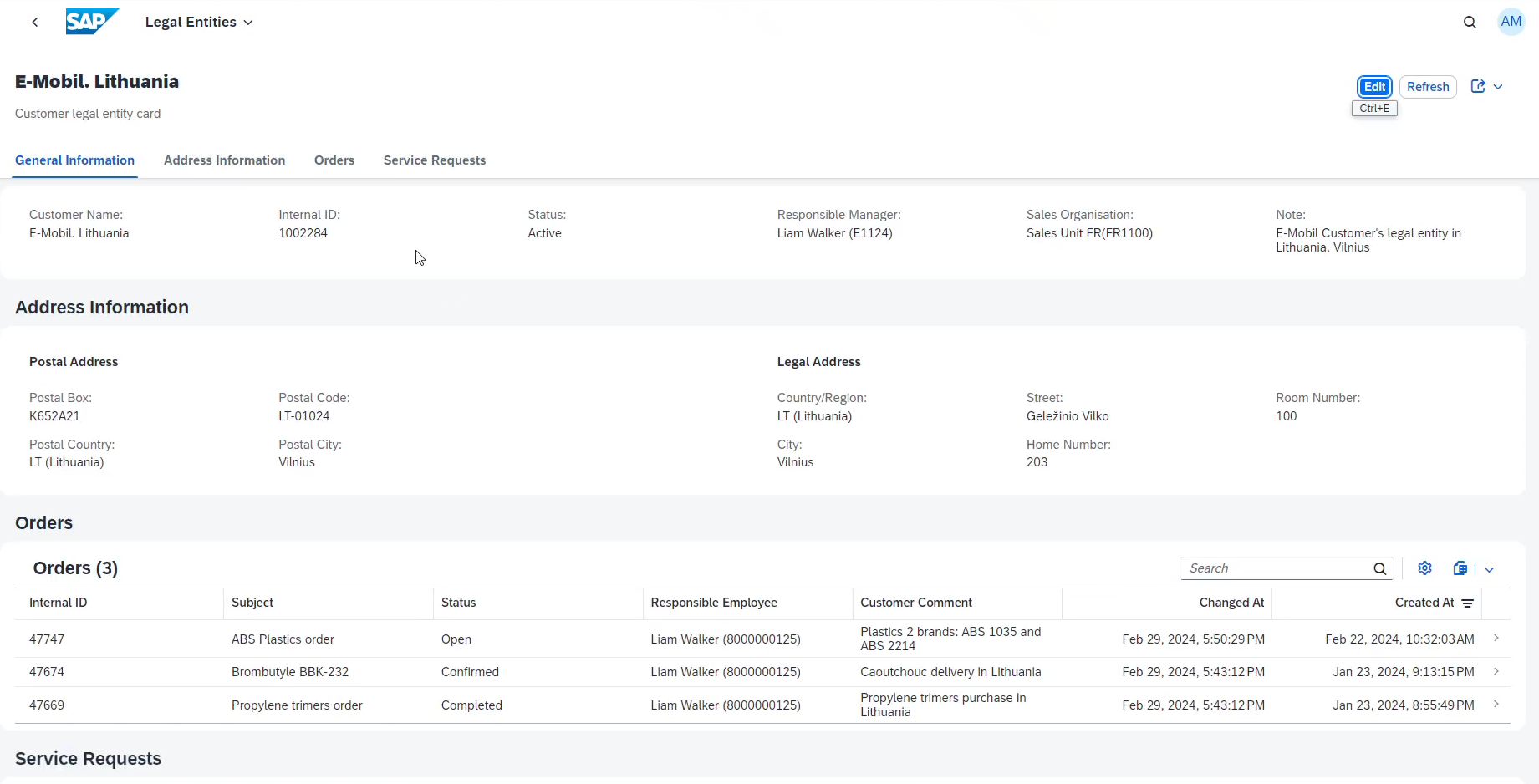
This layout mirrors the structure that customers are used to seeing in SAP, with clear tables and fields containing quantities, and minimal visual elements. It is ideal for buyers who place large, recurring orders and prefer to swiftly navigate familiar lists of materials.
ECommerce-style interface
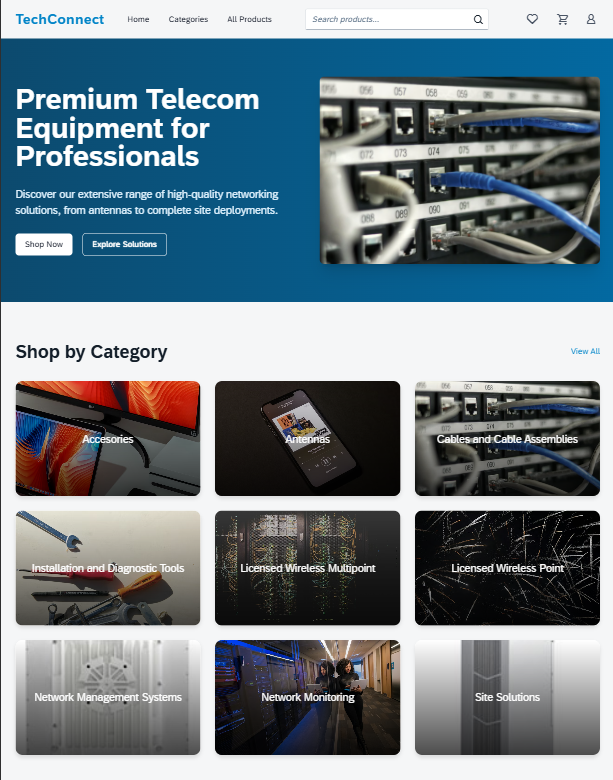
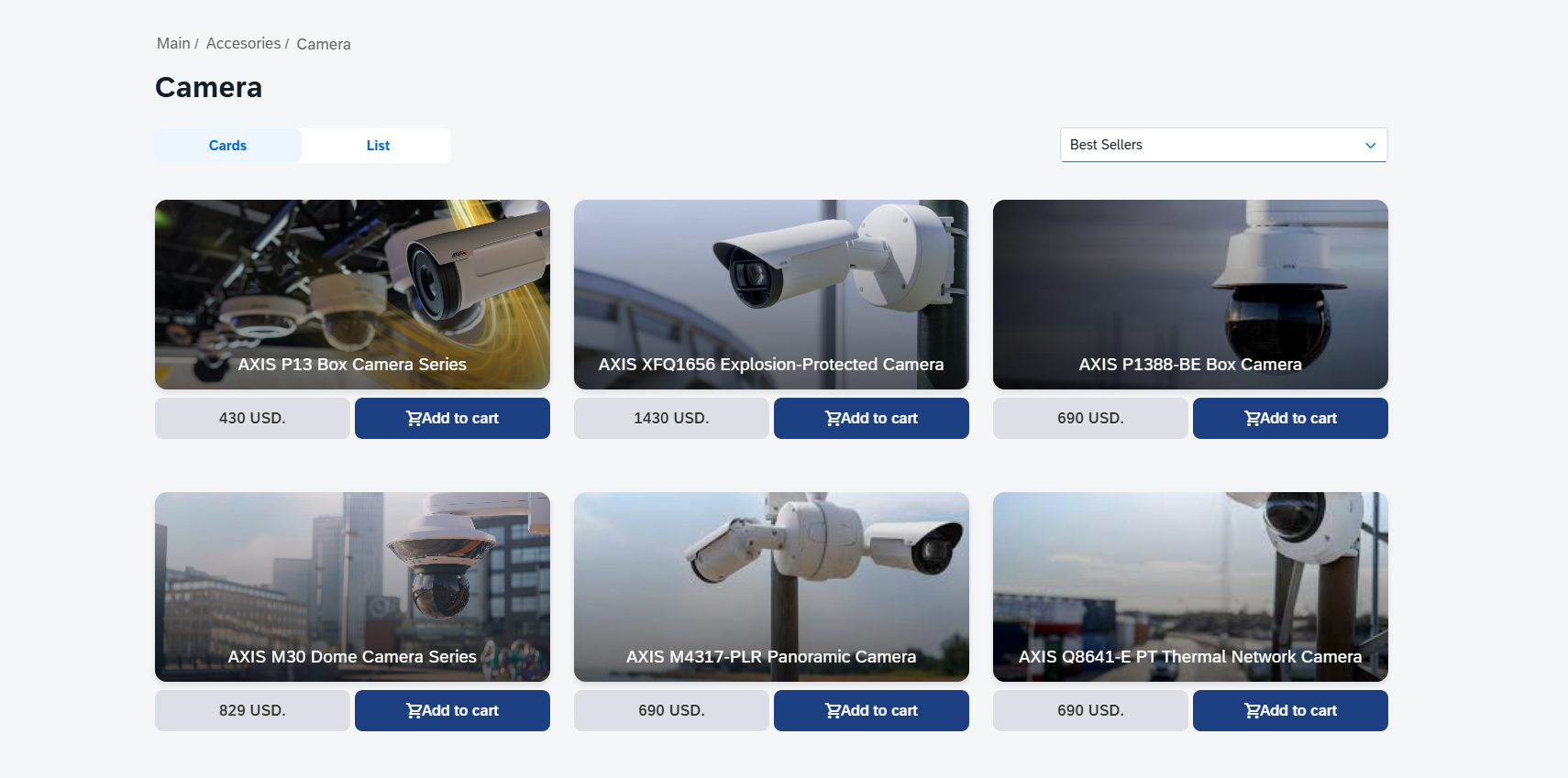
Other customers prefer a more visually guided experience that resembles an online store. Product cards, images, filters, categories, and clean UI elements make navigation easy, even for those who rarely interact with SAP-like systems.
Both interfaces are adaptive. They are optimized for various digital devices, like monitors, tablets, and smartphones. This allows customers to easily access the portal from any device.
Whether customers choose a classic SAP-style view or a modern eCommerce view, the result is the same: they finally gain structured access to the data that already lives inside your SAP system.
Key benefits of our Extended B2B Self-Service Portal for SAP-based companies
Our Extended B2B Self-Service Portal streamlines operations, improves visibility, and strengthens customer relationships. And here are its main benefits for manufacturers and distributors:
-
Reduced manual data entry for inhouse sales teams
Customers don't need to email orders or use Excel files. They can just enter orders directly into SAP. This reduces the risk of errors, speeds up order processing, and lowers operational costs. -
Increased efficiency of sales teams
Sales managers spend far less time answering routine questions about prices, order statuses, or delivery dates. Instead, they can focus on strategic work, such as developing key accounts, proactive sales, and building long-term customer relationships that drive revenue. -
Higher accuracy and cleaner order flow
Because the data comes directly from the customer into the system, the information remains consistent throughout all processes. There are fewer corrections and misunderstandings, resulting in a much more reliable order lifecycle from placement to delivery. -
Improved production planning
Manufacturers can better align production capacity with actual demand when they have real-time visibility into incoming orders. This results in more predictable planning, fewer urgent changes, and better resource management. -
Enhanced customer satisfaction
Customers receive immediate visibility into orders, statuses, and pricing. And access to information is a key factor in building trust, reducing frustration, and strengthening long-term cooperation.
Conclusion
The SAP BTP-based Extended B2B Self-Service Portal connects structured SAP processes with client-facing operations, changing the way you work with B2B customers. It shifts routine ordering and data entry tasks from sales teams to customers, enabling them to place orders, manage details, and track order statuses independently.
Meanwhile, the portal does not interfere with the core SAP system. Customers work in a separate, controlled environment with secure access only to their own data. This allows manufacturers to keep SAP landscape stable and protected while safely opening it up for external users.
The result is clear. Sales teams spend less time on manual order entry and answering repetitive questions. Data quality improves because orders go straight into SAP without rework. Production planning becomes easier thanks to real-time visibility of demand. Customers benefit from faster, clearer, and more transparent interactions.
By shifting routine tasks to self-service and keeping SAP as the single source of truth, the portal reduces operational pain points and frees teams to focus on what really drives value for the business.
Want to see how our Extended B2B Self-Service Portal could improve efficiency and customer experience for your business? Talk to our experts to explore the most suitable approach for your SAP environment.
Frequently Asked Questions
How to measure the success of a B2B customer portal?
Success is measured by operational efficiency. Key indicators include a higher percentage of orders placed through the portal, less manual order entry in SAP, quicker order processing, and fewer routine requests to sales teams.
Can a B2B customer portal integrate with CRM systems?
Yes. Our Extended B2B Self-Service Portal built on SAP BTP can integrate with SAP CRM solutions such as SAP C4C or S/4HANA. Orders and customer activity are synchronized in real time and visible to internal teams.
Who should use a B2B customer portal?
A B2B customer portal is designed for manufacturers and distributors working with repeat business customers and regular, high-volume orders, where manual order handling creates operational overhead.
How does SAP BTP ensure security for a B2B customer portal?
SAP BTP provides a secure, cloud-based environment for B2B customer portals. Customers don't access SAP systems directly. They work in a separate, controlled space where only their own data and actions are available.
Security is enforced through built-in authentication and authorization mechanisms, secure APIs, and strict role-based access control. The entire solution is built within the SAP product ecosystem, which adheres to enterprise-grade security standards. All sensitive operations stay inside SAP, so the portal can't harm the core system.
Can your B2B customer portal be extended with additional capabilities?
Yes, our Extended B2B Self-Service Portal can be expanded with features such as support for multiple legal entities, customer data management, ticket handling via SAP C4C, and analytics for portal orders. These additions can be made without disrupting existing processes.

Subscribe